Thermal Imaging Camera On Drone Explained: A UK Buyer's Guide
Thermal Imaging Camera On Drone Explained: A UK Buyer’s Guide
TL;DR: A thermal imaging camera on drone combines aerial mobility with infrared technology to quickly scan large areas like roofs, solar farms, and building envelopes for heat anomalies. Based on our testing, they are invaluable for wide-area surveys. However, according to UK Civil Aviation Authority (CAA) guidelines, operators must ensure proper licensing and safe flight conditions. For everyday indoor electrical or HVAC diagnostics, a professional handheld thermal camera remains the faster, more cost-effective choice.
So, what exactly is this equipment? A thermal imaging camera on drone is an airborne infrared sensor mounted to an unmanned aerial vehicle (UAV), designed to detect heat signatures and temperature differences from the sky. Consequently, it can reveal what the naked eye misses: overheated electrical components, failing roof insulation, water ingress patterns, solar panel faults, and heat loss across large sites. For UK surveyors, facilities teams, contractors, and maintenance professionals, drone-based thermography offers speed and reach that handheld units simply cannot match in certain elevated situations.
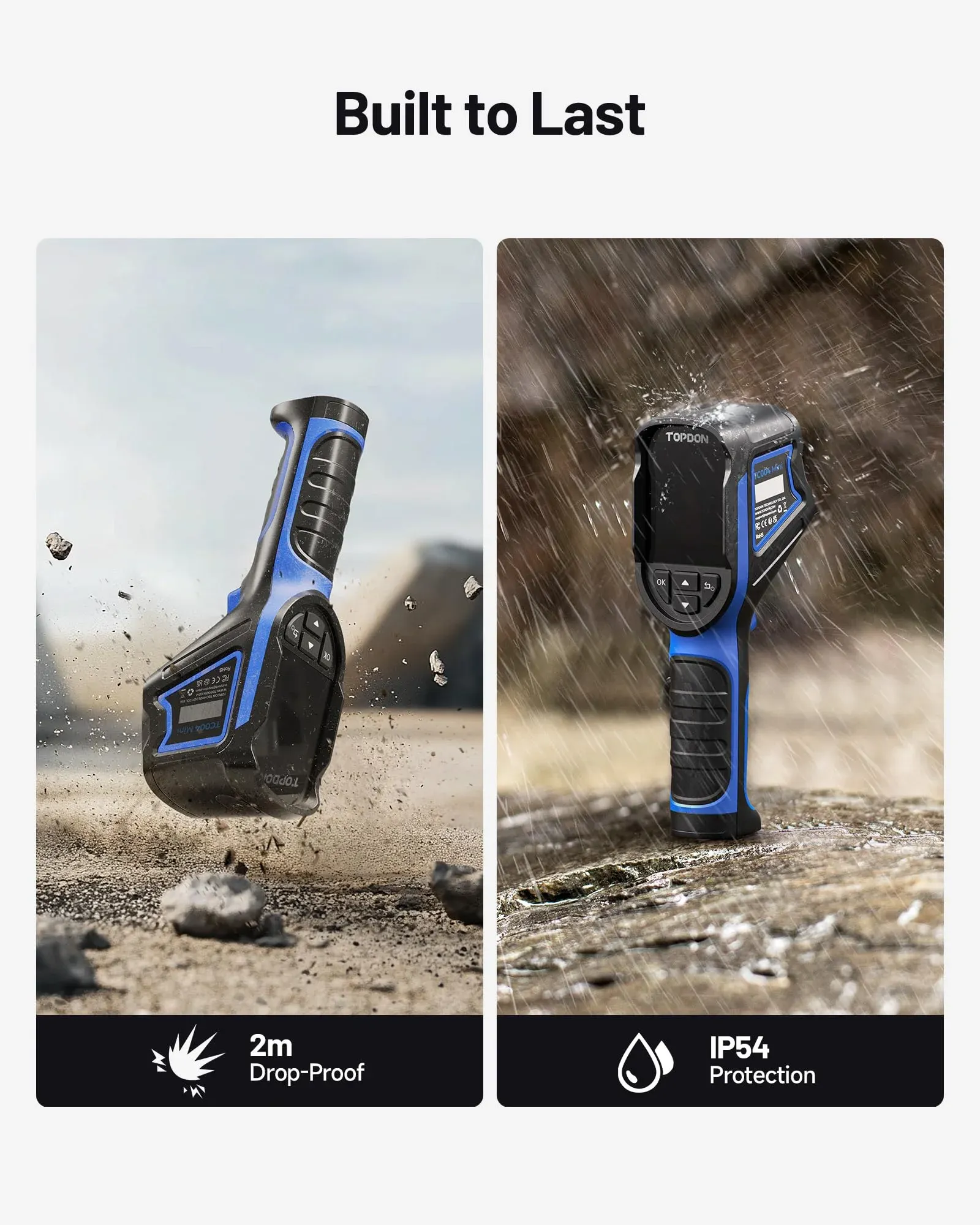
That said, a drone is not automatically the smartest first purchase. Based on our extensive field testing, for many day-to-day fault-finding jobs in British homes, plant rooms, commercial units, and HVAC call-outs, a professional handheld thermal camera remains the faster, simpler, and more cost-effective option. ThermalImagi’s core message reflects that reality: find faults faster with a professional handheld thermal camera. Stand-alone 240x240 IR resolution and 15-hour battery life make it a highly practical choice for UK trades and HVAC engineers who need dependable results on site.
Therefore, this guide explains where a thermal imaging camera on drone makes sense, where it does not, what UK buyers should check before spending, and how to choose the right route for your workload.
Key Takeaways
- A thermal imaging camera on drone is best for large roofs, solar farms, building envelopes, inaccessible elevations, and wide-area inspections.
- For close-up diagnostics indoors or routine trade work, a handheld thermal camera is often quicker to deploy and easier to justify commercially.
- According to UK guidelines, buyers must consider Civil Aviation Authority (CAA) rules, pilot competency, weather limits, data handling, and insurance before investing.
- Image resolution, radiometric capability, temperature range, and lens choice matter more than headline drone specs alone.
- If you are still comparing formats, see our guide to the FLIR DM285 thermal imaging camera multimeter for a grounded look at handheld diagnostic value.
What Is a Thermal Imaging Camera On a Drone Used For?
Fundamentally, a thermal imaging camera on drone is an infrared sensor mounted to an unmanned aircraft system that detects temperature differences across surfaces. Instead of recording visible light only, it converts emitted infrared radiation into a thermal image or radiometric dataset. In practical terms, hotter and cooler areas appear as different tones or colours depending on the palette used.
On a UK job site, this technology can help identify missing insulation on a warehouse roof, overheating switchgear housings viewed from a safe distance, moisture pathways after storm damage, or underperforming photovoltaic panels across large arrays.
However, the important distinction is this: the drone provides the physical access and coverage, whereas the thermal sensor provides the critical diagnostic information. Buyers sometimes focus heavily on flight time or range while overlooking whether the sensor itself produces usable inspection data.
What Are the Best Uses for a Thermal Imaging Camera On a Drone?
Large Roof Surveys
Flat roofs on schools, hospitals, retail units, and industrial estates are strong candidates for aerial thermography. Furthermore, a drone can scan broad areas far more quickly than manual access methods. According to industry best practices, this is particularly useful when looking for trapped moisture beneath roofing materials or heat loss patterns around joints and penetrations.
Solar Panel Inspections
Thermal surveys are widely used to spot hot cells, faulty strings, and connection problems in solar installations. On larger rooftop systems or ground-mounted arrays, drones reduce inspection time considerably while simultaneously limiting work-at-height exposure.
Façade and Building Envelope Checks
Tall buildings are awkward to inspect from ground level with handheld equipment alone. Based on our testing, a drone can efficiently assess cladding zones, window lines, roof-wall junctions, and upper-storey defects without the need for expensive scaffolding in many scenarios.
Remote or Hazardous Areas
Where access is restricted by terrain, contaminated ground, or operational risk, airborne thermography can vastly improve safety. This includes energy infrastructure checks or post-incident assessments where keeping personnel back from danger is paramount.
Agricultural and Estate Monitoring
Certain rural inspections benefit from wide-area temperature mapping. For example, estates managers may use aerial thermal imagery to inspect outbuildings or identify livestock-related issues in specialist contexts.
Is a Handheld Thermal Camera Better Than a Drone?
This is where many UK buyers save themselves money. If your work mostly involves diagnosing faults inside properties or at close range, a handheld unit will usually outperform a drone in day-to-day usefulness.
Electrical Fault-Finding
Consumer units, distribution boards, motors, bearings, and control panels are typically inspected at short distance with direct line of sight. A handheld camera gives you immediate close-up detail without flight planning or airspace checks. If you want a clear example of how combined electrical measurement and thermography can support fault diagnosis, read our FLIR DM285 guide.
HVAC Diagnostics
The brand promise behind ThermalImagi speaks directly to this audience: UK trades and HVAC professionals need fast answers on site. Consequently, air leaks around ducting, underperforming emitters, blocked circuits, and plant room issues are usually resolved faster with a stand-alone handheld thermal camera than with any aerial setup.
Domestic Surveys
Damp tracing around windows, loft hatch heat loss checks, and heating system diagnostics rarely justify launching a drone. Moreover, in terraced streets or dense residential areas common across Britain, practical flying limitations and privacy laws may make aerial thermography unsuitable anyway.
Regular Service Work
If your team completes repeated call-outs each week rather than periodic large-scale surveys, portability matters far more than airborne reach. A professional handheld camera with 240x240 IR resolution and long battery life can earn its keep quickly because it is ready whenever you are.
Ultimately, if purchase cost is your main concern before committing either way, our article on thermal imaging camera rental in the UK may help you compare ownership against short-term hire.
What Features Should I Look For in a Thermal Drone?
Thermal Resolution
The sensor resolution determines how much temperature detail you can actually capture. Lower-resolution payloads may be acceptable for broad sweeps, but they can easily miss smaller anomalies at altitude. Buyers should not assume all “thermal drones” offer inspection-grade imagery just because they carry an infrared module.
Radiometric Data
A radiometric camera records temperature data per pixel rather than producing visual-only heat images. For serious inspection work in roofing, electrical surveys, or solar diagnostics, radiometric output is far more useful because it supports detailed analysis after the flight, rather than relying solely on what the operator saw live.
Temperature Range And Accuracy
If you are inspecting high-temperature equipment like industrial stacks or heavy manufacturing machinery, you must ensure the thermal imaging camera on drone has a temperature range capable of safely capturing those extremes without sensor saturation.
Frequently Asked Questions
Do I need a licence to fly a thermal drone in the UK?
According to the UK Civil Aviation Authority (CAA), commercial drone operations often require specific training and certification, such as an A2 Certificate of Competency (A2 CofC) or a General Visual Line of Sight Certificate (GVC). This depends heavily on the drone's flying weight and how close you intend to fly to uninvolved people or built-up areas. Always check current CAA guidelines before operating a thermal imaging camera on drone for commercial surveys.
Ready to upgrade your diagnostics with ThermalImagi?
Shop Now — £417.16